
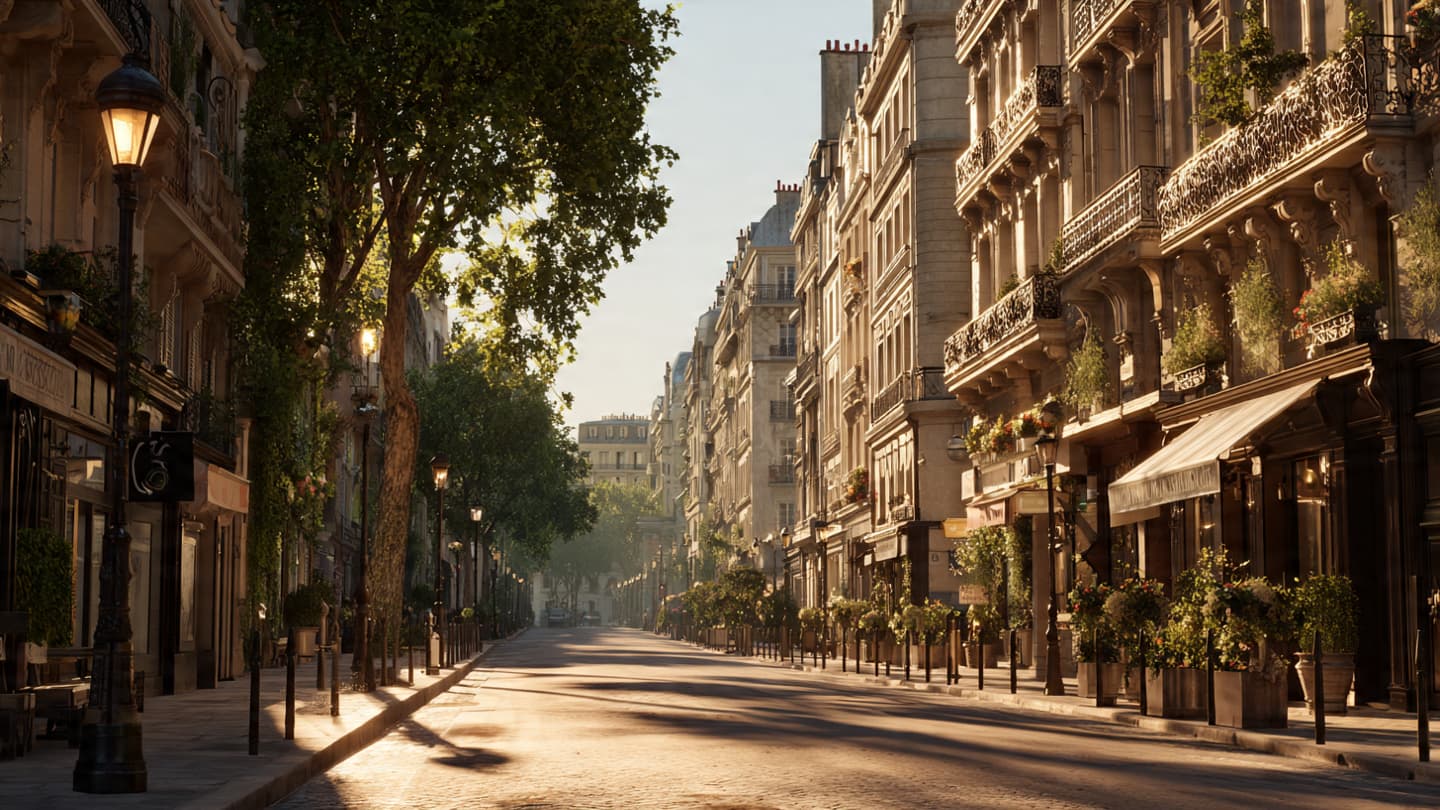
There are summers that feel familiar, and then there are summers that seem to arrive already extended, as if they have skipped their own beginning and settled immediately into persistence. Across parts of Europe, several major cities are now experiencing the latter—a heat that does not simply arrive, but lingers, pressing itself into the rhythm of daily life.
In capitals such as Paris, Rome, Madrid, Berlin, and Athens, residents are describing a season that feels less like weather and more like condition. Temperatures rise earlier in the day, linger later into the night, and compress the usual pauses of urban life into shorter, warmer intervals.
The phrase “it’s getting hotter and it’s not stopping” has become a shorthand for a pattern meteorologists have increasingly documented: longer heatwaves, higher nighttime temperatures, and reduced cooling periods between peaks. In urban environments, this effect is intensified by concrete, asphalt, and dense infrastructure that retains heat long after the sun has set.
In Paris, shaded boulevards that once offered relief now hold warmth well into the evening. In Rome, stone streets absorb and release heat in cycles that mirror the day itself. Madrid’s dry interior climate amplifies intensity, while Berlin—long associated with milder summers—has seen increasingly frequent spikes that test older expectations of seasonal balance. Athens, already accustomed to high summer temperatures, finds itself again at the intersection of heat and historical density, where ancient stone and modern city converge under a single sun.
These conditions are not isolated to individual cities but part of a broader continental trend linked to shifting climate patterns. Scientific observations across Europe have recorded an increase in the frequency and duration of heat extremes over recent decades. What once appeared as exceptional weather is becoming more structurally present in seasonal forecasts.
Urban design plays a role in how these temperatures are experienced. Dense building materials, limited green space in certain districts, and heat-absorbing surfaces contribute to what is often described as the “urban heat island” effect. This phenomenon can make cities several degrees warmer than surrounding rural areas, particularly during sustained heat events.
The human dimension of this shift is most visible in the adjustments of daily routines. Public transport becomes slower to fill, shaded parks grow more central to social life, and midday hours are often reorganized around avoidance rather than activity. In some places, cooling centers and public advisories become routine features of summer infrastructure.
At night, when cities typically release the heat absorbed during the day, temperatures now often remain elevated, altering sleep patterns and extending the sensation of heat beyond daylight hours. The result is a blurring of temporal boundaries: mornings begin warmer, evenings end later, and the traditional relief of night becomes less certain.
As municipal authorities across these capitals adapt, responses vary—ranging from expanded green infrastructure projects to heat emergency protocols. Yet the underlying condition remains consistent: a season that feels less cyclical and more continuous.
What emerges across these cities is not a singular crisis moment, but a sustained atmospheric shift—one that changes how urban life is paced, experienced, and remembered. The language of weather begins to merge with the language of habit, until heat is no longer an interruption, but part of the structure of everyday life.
And in that slow convergence, Europe’s capitals find themselves negotiating not just temperature, but time itself—learning to live within summers that no longer quite know when to end.
AI Image Disclaimer Visuals are AI-generated and serve as conceptual representations of climate and urban conditions, not real photographs.
Sources European Environment Agency, BBC News, Reuters, World Meteorological Organization, The Guardian
Note: This article was published on BanxChange.com and is powered by the BXE Token on the XRP Ledger. For the latest articles and news, please visit BanxChange.com