
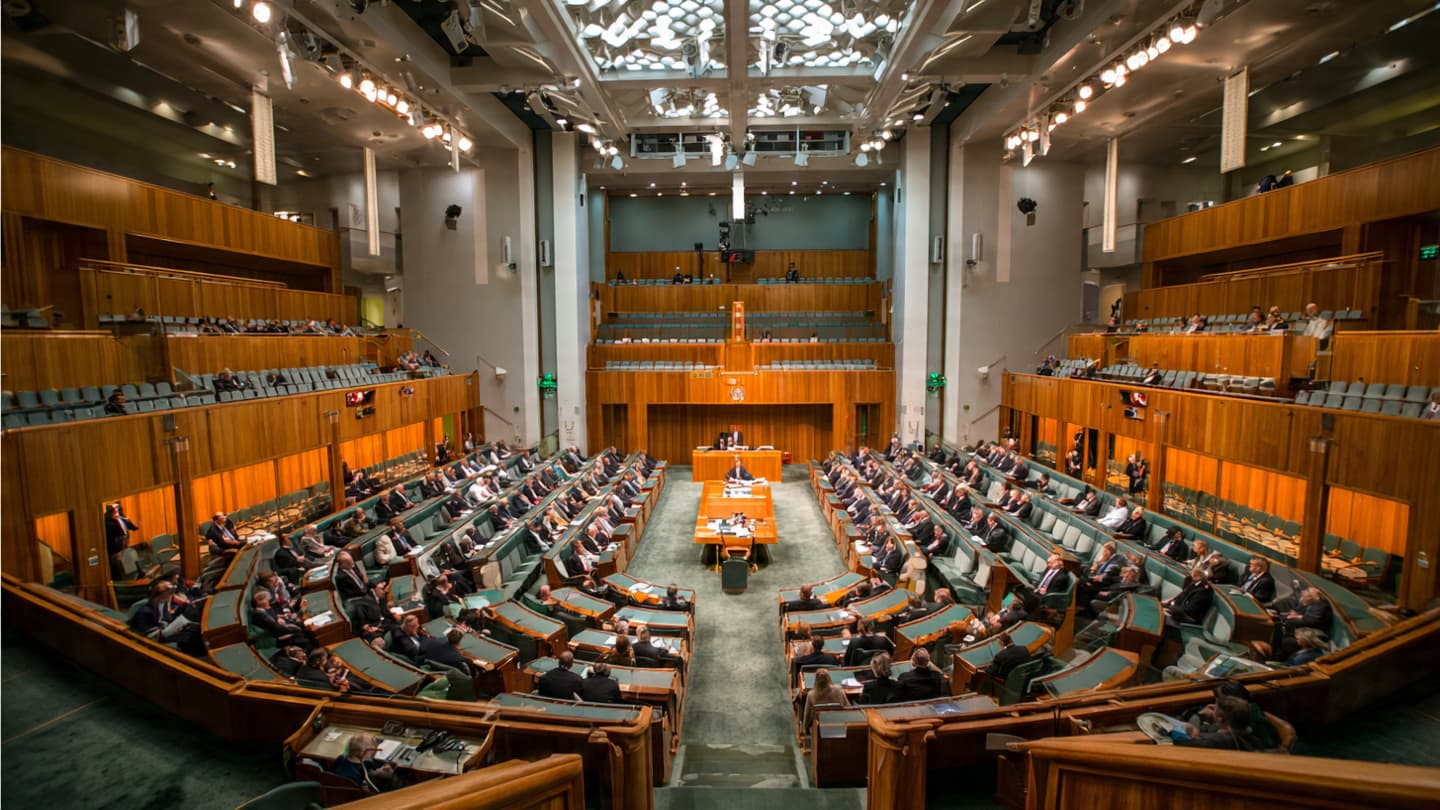
In the measured cadence of parliamentary language, certain phrases carry more than policy intent—they carry thresholds. Not physical boundaries, but moral and diplomatic ones, drawn carefully in speech before they are ever tested in action. In Australia, such a threshold has recently been invoked in discussions surrounding foreign policy positioning in relation to the ongoing conflict dynamics involving Israel.
A senior figure within the governing Australian Labor Party, Ed Husic, has called for the establishment of what he described as a “red line” regarding Israel’s actions, including concerns over the treatment of flotilla activists involved in humanitarian efforts connected to Gaza-bound maritime missions. The language reflects an internal push within political discourse to more clearly define the limits of acceptable conduct and response.
Flotillas, in recent years, have become symbolic vessels—small in physical scale but large in political resonance. They move across international waters carrying humanitarian intent, while simultaneously entering the contested space between activism, security policy, and diplomatic interpretation. The treatment of such missions often becomes a focal point for broader debates about access, aid delivery, and maritime enforcement practices in conflict zones.
Within Australia’s political landscape, discussions of “red lines” are not merely rhetorical flourishes. They imply potential shifts in diplomatic posture, signaling conditions under which policy responses may become more assertive or explicitly critical. Yet such thresholds are rarely fixed in advance; they are negotiated in real time, shaped by evolving events, alliances, and domestic political considerations.
The broader context includes ongoing international scrutiny of conduct in the region, particularly in relation to humanitarian access and civilian protection. These concerns have been echoed in multiple forums, where governments and organizations attempt to balance strategic relationships with human rights considerations. In this space, language becomes a primary instrument—carefully calibrated, frequently contested, and closely observed.
Within parliamentary debate, calls for clearer positioning often reflect both external pressure and internal divergence. Different factions within governing coalitions may emphasize varying aspects of foreign policy: strategic alignment, humanitarian obligations, or legal interpretations of international conduct. The invocation of a “red line” therefore functions not only as a policy suggestion, but as a signal of where such tensions may be tightening.
At the same time, flotilla-related incidents continue to draw attention due to their visibility and symbolic weight. These missions, often organized by civil society groups, highlight the intersection between humanitarian advocacy and maritime enforcement. Their treatment becomes part of a wider narrative that extends beyond any single voyage, feeding into ongoing global discussions about access, blockade conditions, and the rules governing contested waters.
As these debates unfold, Australia’s position is shaped by its broader diplomatic relationships and its engagement with multilateral institutions. Foreign policy in such contexts is rarely defined by a single statement; rather, it emerges from accumulated positions, parliamentary discourse, and responses to unfolding events.
The call for a defined “red line” thus sits within a familiar pattern of democratic deliberation: where language is used to test the boundaries of policy before those boundaries are formally set. Whether such a line will be adopted in practice remains part of an ongoing political conversation.
For now, the discussion reflects a moment in which international events, domestic politics, and humanitarian concerns converge in parliamentary language—where what is said about limits may, over time, shape how those limits are understood in action.
AI Image Disclaimer Visuals are AI-generated and intended as conceptual representations of political and humanitarian discourse, not real photographs.
Sources Reuters, Associated Press, BBC News, The Guardian, Al Jazeera
Note: This article was published on BanxChange.com and is powered by the BXE Token on the XRP Ledger. For the latest articles and news, please visit BanxChange.com