
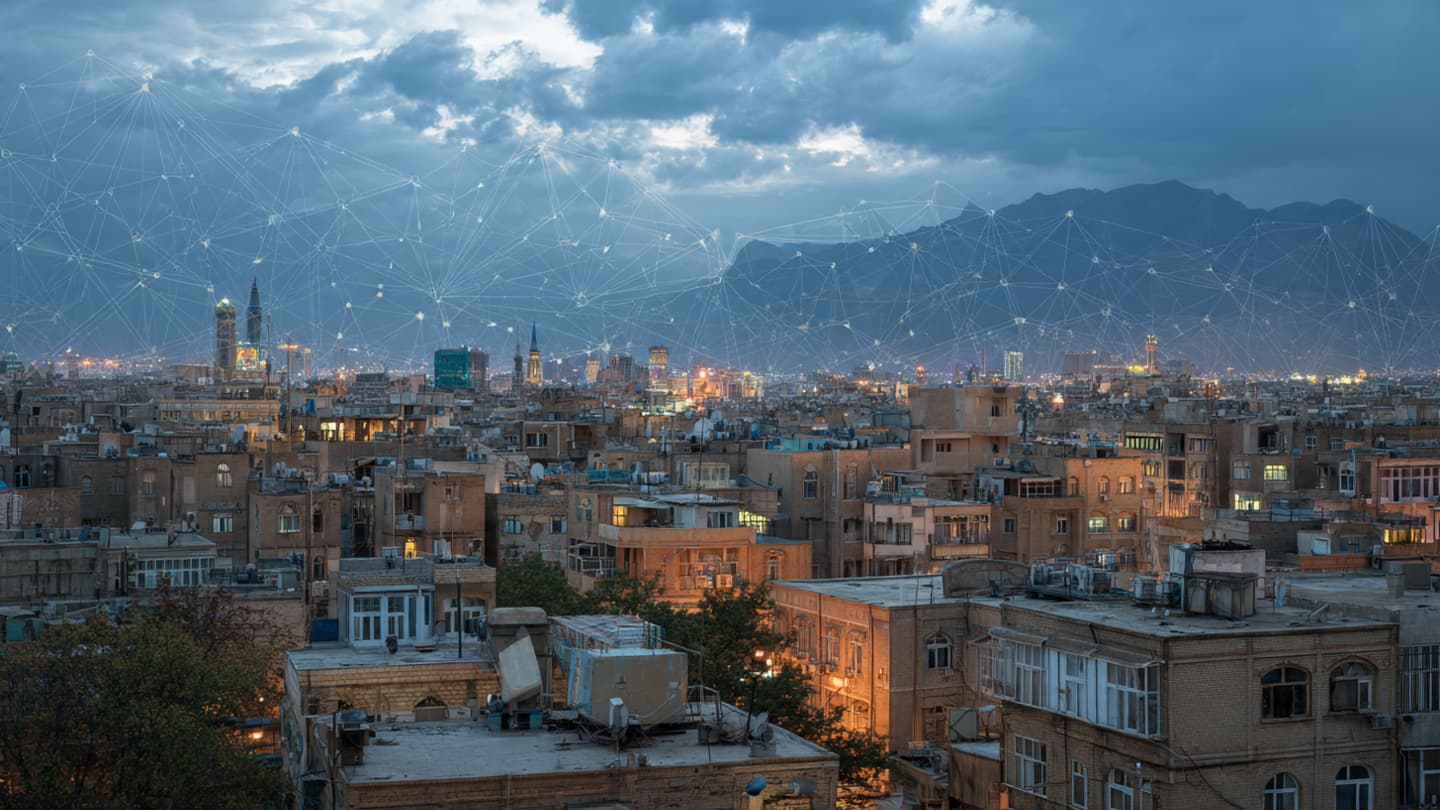
There are moments when connectivity feels less like technology and more like atmosphere—something that surrounds daily life until it suddenly thins, leaving absence where flow once existed. In Iran, that atmosphere has recently shifted again, as internet access begins to return gradually following a period of disruption linked to escalating tensions.
Officials in Iran have described recent strikes attributed to the United States as a “bad faith” signal, framing the developments as part of a broader pattern of mistrust and confrontation. The language itself carries a familiar weight, shaped by years of geopolitical friction in which military action and diplomatic messaging often unfold in parallel, rarely aligned in interpretation.
At the same time, internet services—disrupted in the wake of heightened security concerns and instability—have reportedly begun to be restored in phases. The return is not immediate or uniform, but gradual, as connectivity resumes across regions at different speeds. In such moments, digital access becomes more than convenience; it becomes a measure of normalcy slowly reassembling itself.
The interruption of internet services during periods of tension has become a recurring feature in regions experiencing instability. Authorities often cite security considerations, information control, or infrastructure protection as reasons for temporary restrictions. Yet for everyday users, the effect is more immediate and intimate: communication slows, news becomes fragmented, and the outside world feels distant in ways that are difficult to quantify.
Within the broader context of U.S.–Iran relations, such developments are rarely isolated events. They tend to sit within layered sequences of action and response, where military activity, diplomatic statements, and digital conditions intersect. The recent characterization of strikes as “bad faith” reflects not only disagreement over specific incidents, but also a deeper interpretive divide over intent and legitimacy.
As connectivity begins to return, the process itself reveals unevenness—some areas regaining access more quickly than others, some services stabilizing before full restoration. This gradual re-emergence of digital life often mirrors the broader rhythm of post-tension recovery, where infrastructure does not switch back on all at once, but instead reactivates in stages.
For residents, the return of internet access can feel like a quiet reopening of space: messages resume, information flows, and daily coordination regains its familiar rhythm. Yet the memory of interruption lingers, shaping how stability is perceived in the days that follow.
Meanwhile, official statements continue to circulate, each side interpreting recent events through its own framework of causality and response. In this environment, language and connectivity become intertwined—one shaping how events are described, the other shaping how they are experienced.
As the situation evolves, attention remains divided between the diplomatic sphere and the infrastructure that supports everyday life. Both operate on different timelines, yet each influences how the moment is understood.
In the end, what emerges is not only a narrative of strikes and responses, but also one of restoration—partial, uneven, and still unfolding. A network coming back online, a statement issued in response, and a landscape where both signal and silence continue to define the space between events.
AI Image Disclaimer Images are AI-generated and intended as conceptual representations of infrastructure and geopolitical conditions, not real photographs.
Sources Reuters, Associated Press, BBC News, Al Jazeera, The Guardian
Note: This article was published on BanxChange.com and is powered by the BXE Token on the XRP Ledger. For the latest articles and news, please visit BanxChange.com