
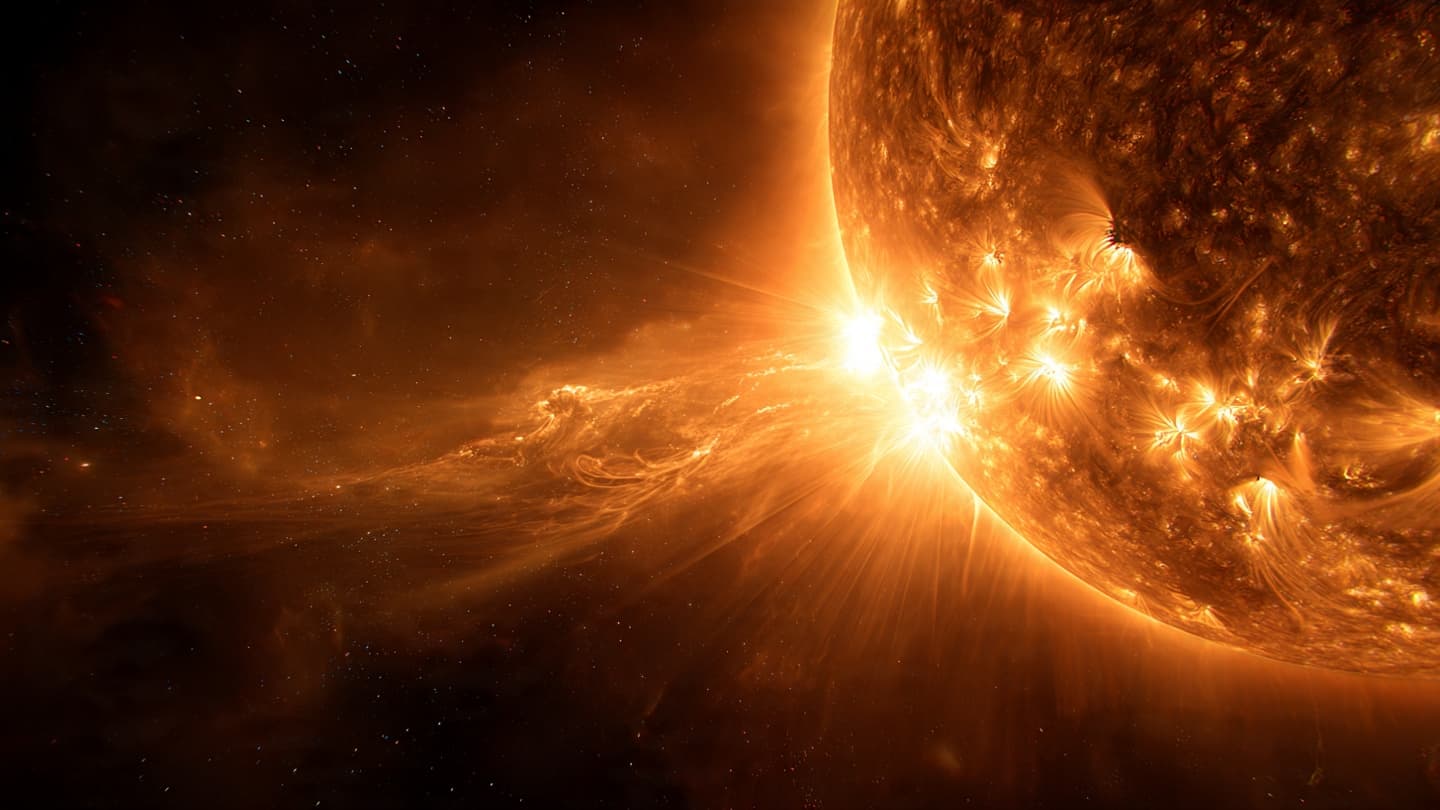
The Sun provides the energy that sustains life on Earth, yet it also produces powerful bursts of activity capable of affecting technologies upon which modern societies depend. Solar flares and coronal mass ejections can influence satellites, radio communications, navigation systems, and electrical power infrastructure. American space scientists have announced improvements to predictive models that aim to better forecast extreme space weather events.
The research combines satellite observations, solar physics, and advanced computer modeling to improve forecasts of solar activity. Scientists say the updated models provide more accurate estimates of when major solar disturbances may occur and how they could affect Earth's near-space environment.
Space weather refers to changing conditions caused by activity on the Sun. While most solar events have little noticeable impact on daily life, particularly strong eruptions can interfere with satellite operations, aviation communications, GPS navigation, and high-voltage electrical transmission systems.
Researchers integrated new observational data collected by solar observatories with artificial intelligence and high-performance computing techniques. These improvements allow forecasting systems to identify patterns more effectively and produce earlier warnings for potentially disruptive events.
Government agencies and satellite operators rely on space weather forecasts to protect valuable infrastructure. Early warnings provide time to adjust satellite orientations, protect sensitive electronic systems, and coordinate responses that reduce operational risks.
Scientists emphasized that forecasting remains an evolving field. Although prediction accuracy continues improving, solar activity remains extraordinarily complex, requiring continuous observation through both ground-based observatories and space missions.
International cooperation plays an important role in monitoring the Sun. Space agencies and research institutions regularly exchange scientific data, improving global forecasting capabilities while supporting scientific understanding of our nearest star.
The improved forecasting models represent another meaningful advance in protecting the technologies that connect modern societies. As dependence on satellites and digital infrastructure continues growing, more accurate space weather predictions will help strengthen resilience against natural events originating nearly 150 million kilometers away.
AI Image Disclaimer: The accompanying illustrations are AI-generated artistic representations based on established scientific concepts and are not actual spacecraft imagery.
Source Verification: NASA, NOAA Space Weather Prediction Center, Reuters, Space.com, Scientific American
Note: This article was published on BanxChange.com and is powered by the BXE Token on the XRP Ledger. For the latest articles and news, please visit BanxChange.com