
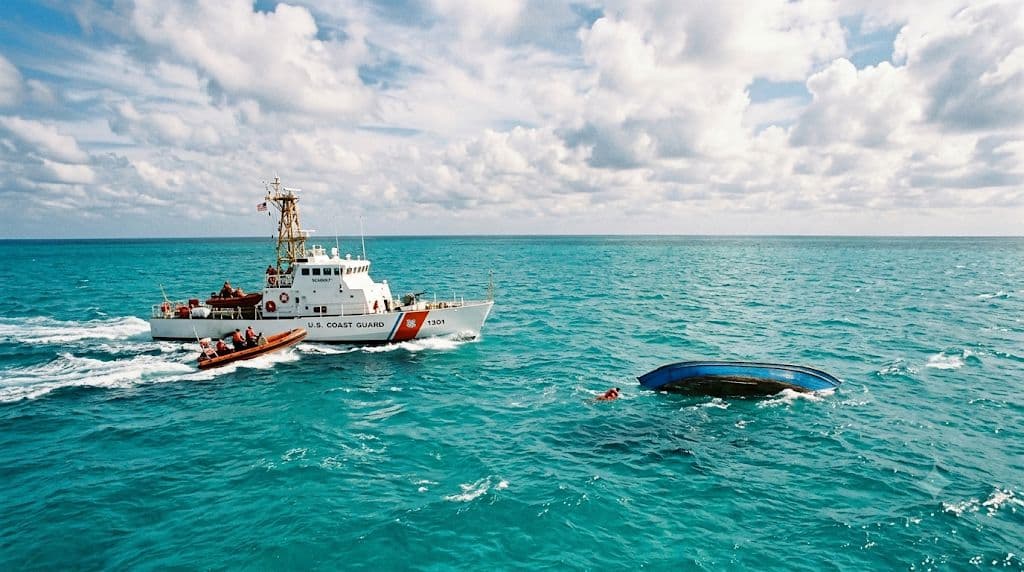
The waters surrounding Praslin Island are usually the epitome of a tranquil paradise, where shifting shades of turquoise fade into the deep indigo of the open ocean. It is a space where travelers come to lose themselves in the rhythm of the waves, trusting the calm surface to carry them between granite islands. Yet, the Indian Ocean remains an immense and powerful system, capable of generating sudden, isolated swells even on days that appear entirely serene. It was during one such unsuspecting excursion that the sea asserted its hidden strength.
The small pleasure boat, carrying a group of international visitors on a afternoon snorkeling trip, encountered a series of rogue waves just beyond the protective reef. Within moments, the vessel lost its balance, the blue hull turning over in the churning white water. The passengers found themselves cast into the deep, clinging to life vests and the slick, upturned surface of the boat. The transition from leisure to survival was instantaneous, marked by the rush of salt water and the vast emptiness of the horizon.
A nearby fishing vessel spotted the distress flare, its bright red light cutting through the bright afternoon glare, and immediately alerted the Coast Guard base at Victoria. Emergency response vessels were dispatched without delay, cutting through the chop to reach the coordinates before the changing afternoon currents could drift the survivors further into the open sea. Every minute spent in the water was a negotiation with fatigue and the rising anxiety of the deep.
When the rescue craft arrived, they found the group holding together, their bright orange vests providing a crucial visual marker against the vast blue canvas. Coast Guard personnel worked methodically to pull the shaken tourists from the water, offering warm blankets and immediate medical assessments on deck. Despite the shock of the immersion, the rapid response ensured that all passengers were accounted for without a single serious injury.
The survivors were brought to the harbor at Praslin, where local medical teams were waiting to provide additional care and monitor for signs of secondary drowning. The relief among the families was palpable, a quiet contrast to the dramatic ordeal they had experienced just hours prior. For many, the experience was a profound lesson in the vulnerability of human endeavors when confronted with the raw scale of the ocean.
Maritime authorities have launched a formal review into the incident, focusing on whether the vessel was carrying the mandatory safety equipment and adhering to local capacity limits. Early reports indicate that the captain acted appropriately once the vessel capsized, ensuring that all passengers remained attached to the hull until help arrived. Such safety measures are critical for a nation whose economy is deeply intertwined with marine tourism.
The local hospitality sector has moved quickly to assist the affected tourists, replacing lost documents and arranging alternative accommodations for the remainder of their stay. While the event was an unwelcome interruption to their holidays, many expressed deep gratitude for the professionalism of the Seychellois rescue teams. The memory of the blue water turning over will linger, but so too will the memory of the hands that pulled them out.
By evening, the harbor had returned to its quiet routine, the masts of yachts rocking gently against a backdrop of a crimson sunset. The overturned boat was eventually towed back to the shallows, a hollow shell resting on the sand. The ocean, now completely calm once more, gave no hint of the midday drama, its surface reflecting the stars with a cool, indifferent beauty.
Note: This article was published on BanxChange.com and is powered by the BXE Token on the XRP Ledger. For the latest articles and news, please visit BanxChange.com